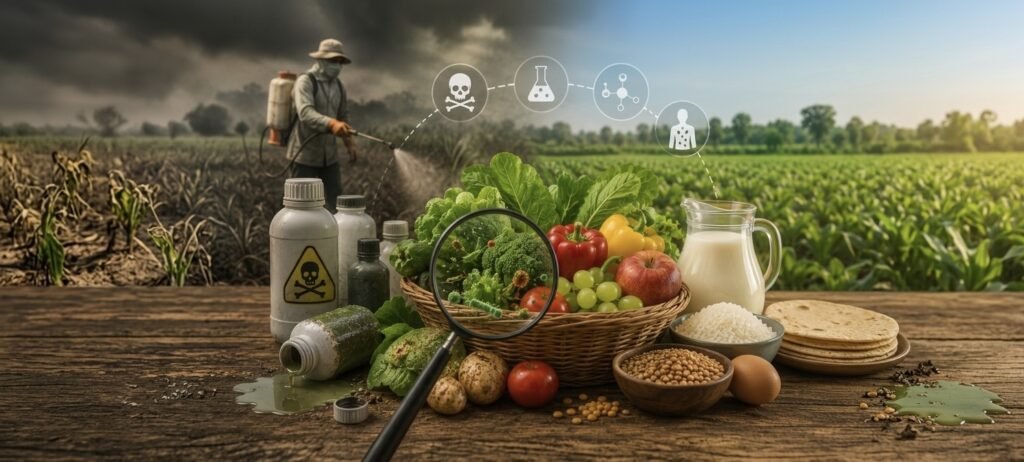
In today’s fast-paced world, appearance often matters more than purity. Bright vegetables, spotless fruits, and perfectly polished grains may look appealing on store shelves — but behind this visual perfection lies a growing concern: the excessive use of chemical pesticides in food production.
At ShuddhKrishi Organix, we believe people deserve to know what reaches their plate and how it affects their health, families, and future generations.
What Are Chemical Pesticides?
Chemical pesticides are synthetic substances used in farming to kill insects, weeds, fungi, and other organisms that may damage crops. While they help increase short-term agricultural productivity, excessive and uncontrolled use can leave harmful residues on food products.
These chemicals are commonly sprayed on:
In many conventional farming systems, repeated spraying becomes a routine practice rather than a necessity.
How Do Pesticides Enter Our Food?
Even after washing or cooking, traces of pesticides can remain on or inside food items. Some chemicals penetrate deep into the produce and cannot be removed completely.
Pesticide residues may enter our body through:
Over time, regular exposure — even in small amounts — can accumulate in the body.
Possible Health Concerns Linked to Excessive Pesticide Exposure
Scientific studies across the world have raised concerns about long-term exposure to certain agricultural chemicals. While the impact depends on quantity and frequency, excessive pesticide intake has been associated with:
Continuous exposure to harmful chemicals may affect the body’s natural defense system.
Some pesticides can interfere with hormone function and metabolic health.
Chemical residues may contribute to allergies, skin irritation, and breathing difficulties in sensitive individuals.
Children are more vulnerable to toxic exposure due to their developing immune and nervous systems.
Research continues to study links between prolonged chemical exposure and chronic health conditions.
Environmental Impact of Chemical Farming
The effects of pesticides go beyond human health. Excessive chemical farming also harms:
Soil Health
Beneficial microorganisms in soil get damaged, reducing natural fertility over time.
Water Sources
Chemical runoff contaminates rivers, lakes, and groundwater.
Pollinators & Biodiversity
Bees, butterflies, birds, and other beneficial organisms are severely affected by toxic agricultural chemicals.
Farmer Wellbeing
Direct exposure during spraying can impact the health of farming communities.
Why Organic & Natural Farming Matters
Organic and natural farming approaches aim to reduce dependency on synthetic chemicals and work in harmony with nature.
At ShuddhKrishi Organix, we strongly believe in:
The goal is not just healthier products — but healthier ecosystems and communities.
How Consumers Can Make Better Choices
You do not need to change everything overnight. Small conscious choices can make a big difference.
Choose Trusted Sources
Buy from brands that emphasize transparency and responsible sourcing.
Ask Questions
Know where your food comes from and how it is grown.
Prefer Seasonal Produce
Seasonal crops often require fewer artificial interventions.
Support Sustainable Farming
Every purchase supports a farming system — choose wisely.
A Shift Towards Conscious Eating
Food should nourish, not silently harm. As awareness grows, more families are choosing cleaner, responsibly grown products that prioritize purity over appearance.
At ShuddhKrishi Organix, our mission is rooted in bringing authentic, naturally cultivated products closer to conscious consumers who value health, honesty, and sustainability.
Because purity begins at the source.
Conclusion
Chemical pesticides have become a hidden part of modern food systems, often unnoticed in everyday meals. Understanding their impact is the first step toward making informed and healthier choices.
Choosing responsibly sourced and naturally grown food is not just a lifestyle trend — it is an investment in long-term wellbeing, environmental balance, and future generations.
ShuddhKrishi Organix
Pure Food. Honest Farming. Conscious Living.